

VA Manufactured Home Requirements: 2026 Standards and Eligibility Rules for All 50 States
To finance a manufactured home with a VA loan, the home must be built on or after June 15, 1976, carry its HUD certification label and data plate, sit on a permanent foundation that meets HUD and local code, and be titled as real property on land the borrower owns.
The Department of Veterans Affairs does not override state law, so the home must also be classified as real property in its state. As of 2026, every state except New York allows this. Manufactured Nationwide finances VA manufactured home loans in all 50 states where the home qualifies, in-house, with no land-lease restrictions to navigate elsewhere.
The home must be built on or after June 15, 1976 under the HUD Code. Anything older is a pre-HUD mobile home and is permanently ineligible. No lender can override this.
Each section must display its red HUD certification label, and the home must have its HUD data plate. Missing tags can be verified through IBTS or the manufacturer.
The home must sit on a permanent foundation meeting the HUD Permanent Foundations Guide and local code, with proper footings, anchoring, drainage, and permanent skirting. Many lenders require an engineer certification.
The title must be surrendered and the home recorded as real property, permanently affixed to land the borrower owns. The home and land are financed together. Leased-land and park homes do not qualify.
The home must meet the VA Minimum Property Requirements: sound roof, working utilities, no structural defects or moisture intrusion, safe access, and available comparable sales.
The Veteran must occupy the home as a primary residence, and the state must allow manufactured homes as real property. As of 2026, every state qualifies except New York, which permits only chattel loans.
Not Sure If Your Home Qualifies?We review eligibility, HUD compliance, and foundation requirements in all 50 states. No credit pull.
Skip the reading. Find out if your home qualifies in all 50 states. No credit pull.
Check Eligibility
Can You Get a VA Loan on a Manufactured Home?
Yes. You can get a VA loan on a manufactured home as long as it meets the requirements below. The home must be built on or after June 15, 1976, sit on a permanent foundation, and be titled as real property on land you own, and you must use it as your primary residence. As of 2026 this is allowed in every state except New York, which currently permits only chattel loans on manufactured homes.
We offer new from dealer manufactured construction loans, manufactured land and home loans, manufactured purchase loans for homes already existing and fixed to land you’ll own, VA manufactured cash out loans (restrictions in Texas), and VA IRRRL rate reduction loans for all factory built properties.
Who Does This VA Manufactured Home Requirements Guide Apply To?
This guide provides the most complete and accurate explanation of VA-manufactured home loan requirements in the United States, supported by federal law, real lender practices, HUD Code standards, and VA underwriting rules. Because states handle manufactured homes differently, this guide covers both national VA requirements and state-by-state considerations.
This page is written for veterans, lenders, real estate professionals, and manufactured home buyers who want the most thorough breakdown available.
Check Your Eligibility Now With No Credit Pull Required
What Are the VA Requirements for a Manufactured Home?
To qualify for a VA mortgage, a manufactured home must satisfy all federal VA requirements, all HUD Code construction standards, and all state-level real property rules. The VA does not override state law. This means a manufactured home that meets HUD Code may still be ineligible if a state does not recognize it as real property or does not allow mortgage financing.
The universal requirements break down into four areas: HUD Code construction standards, the foundation, real property classification, and the appraisal. Each is covered in the sections below.
| Requirement Area | What VA and HUD Require | Most Common Issue |
|---|---|---|
| Construction Date | Built on or after June 15, 1976 under the HUD Code | Pre-1976 mobile homes are permanently ineligible |
| HUD Tags | HUD certification label on each section, plus the data plate | Missing or painted-over tags; verify through IBTS |
| Foundation | Permanent foundation meeting the HUD Permanent Foundations Guide and local code | Homes on blocks without footings or anchoring |
| Real Property | Title surrendered, affidavit of affixture recorded, home and land owned together | Title never surrendered; home still personal property |
| Appraisal | Meets VA Minimum Property Requirements, comparable sales available | Roof life, moisture, or no comps in rural markets |
| Land | Borrower owns the land; financed with the home | Leased-lot or park homes; we do not finance these |
| Movement | VA allows one move from factory to site | Lender overlays restrict homes moved more than once |
| Occupancy | Veteran occupies the home as a primary residence | Second home or investment use is not eligible |

VA Manufactured Home Guidelines: HUD Code and Federal Standards
HUD Code is the foundation of all manufactured home eligibility. Homes built after June 15, 1976, are regulated by the HUD Manufactured Home Construction and Safety Standards.
Federal HUD Requirements
All VA-eligible homes must:
1. Be built on or after June 15, 1976. Homes built before this date are permanently ineligible. No lender, under any circumstance, can override this federal rule.
2. Display a HUD Certification Label. This is the red metal plate commonly called a HUD tag. Each section must have one.
3. Contain a HUD Data Plate. This includes essential information such as manufacturer, model, serial numbers, wind zone, roof load, heating and cooling specifications, and construction code compliance.
4. Conform to design loads. HUD Code ensures the home is designed for appropriate:
Wind zones
Roof snow loads
Thermal zones
These factors vary based on the original construction state and intended installation region.

VA Mobile Home Requirements: Are Mobile Homes Eligible?
In everyday search, people use mobile home and manufactured home to mean the same thing, but the VA treats them differently, and the difference decides eligibility. A true mobile home is one built before June 15, 1976, the date the HUD Code took effect. Those homes are permanently ineligible for VA financing, and no lender can override that federal rule.
A home built on or after June 15, 1976 is a manufactured home built to the HUD Code, and it is eligible for a VA loan when it meets the foundation, real property, and appraisal requirements on this page. So if you are searching for VA mobile home requirements, the build date is what matters first: post-1976 manufactured homes can qualify, while pre-1976 mobile homes cannot.
Manufactured vs Modular vs Mobile
These three terms get used interchangeably in everyday conversation, but the VA and HUD treat them as three different things, and only one is what most buyers actually mean. Here is how they differ and what the VA will finance.
| Home Type | When Built | HUD Code | VA Financing |
|---|---|---|---|
| Mobile home | Before June 15, 1976 | No, pre-Code | Not eligible |
| Manufactured home | On or after June 15, 1976 | Yes | Eligible when the requirements on this page are met |
| Modular home | Any year | No, built to state and local code | Eligible, financed as a standard site-built home |

VA Manufactured Home Foundation Requirements
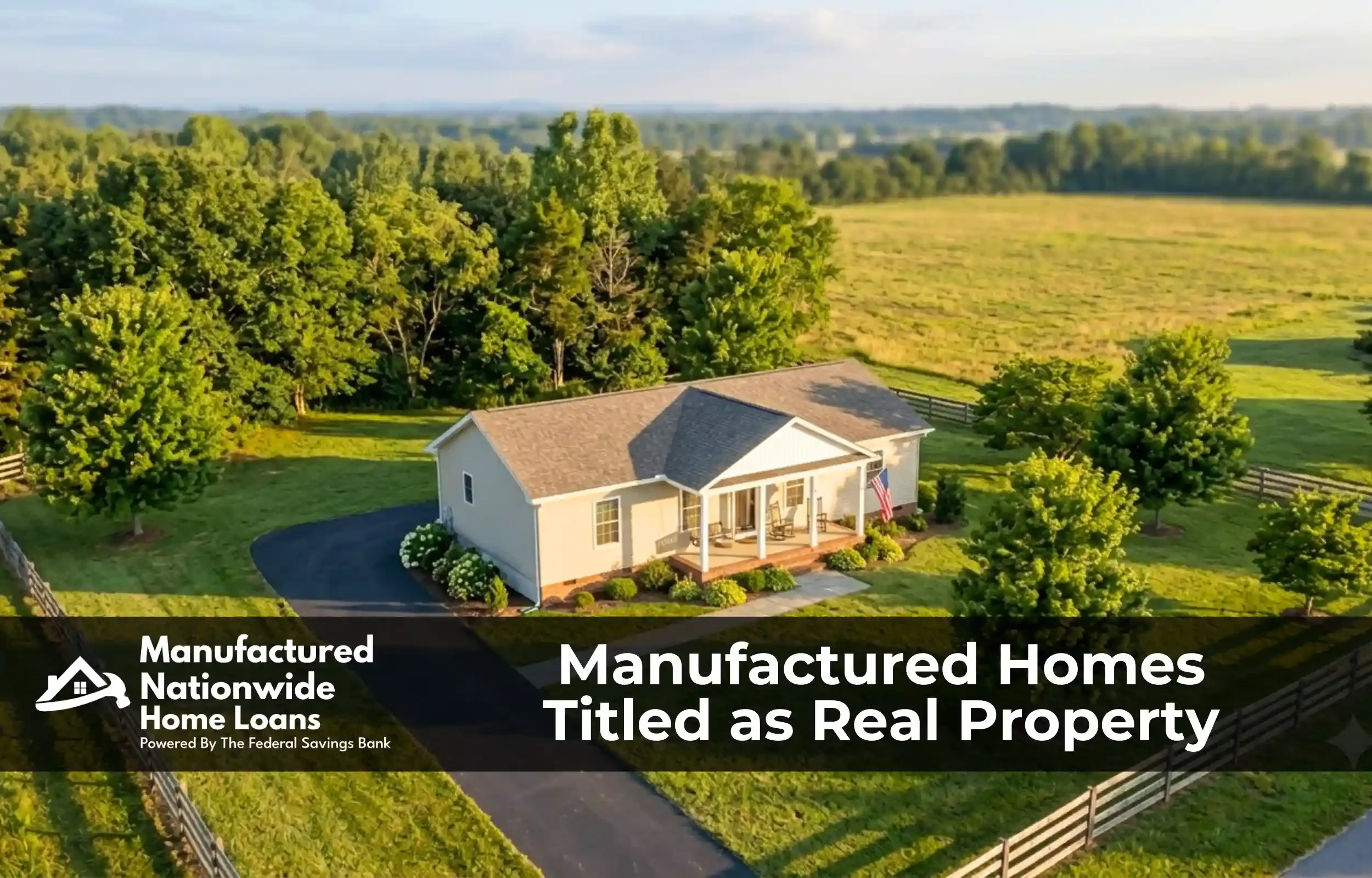
A manufactured home must be permanently attached to a foundation that meets both HUD’s Permanent Foundations Guide for Manufactured Housing and local building codes.
Components of a Compliant Foundation
A VA eligible foundation typically includes:
Continuous or pier foundation system
Properly sized concrete footings
Correct anchoring and tie-downs
Adequate drainage and grading
Frost depth compliance in applicable states
Access and ventilation to the crawlspace
No movable or temporary skirting
No untreated wood structural supports
Engineer Certification
Many lenders require a licensed engineer’s foundation certification confirming the structure meets HUD and VA standards. This is especially common in:
Cold climate states
High wind zone states
Seismic risk areas
Rural counties with older installation practices
Real Property Classification Requirements
The VA can only issue a mortgage on real property. Manufactured homes are not real property by default. Rules vary by state.
To qualify as real property in most states, the homeowner must complete some or all of the following:
Typical Real Property Conversion Steps
Surrender the manufactured home title
Record an affidavit or certificate of affixation
Attach the home permanently to the land
Ensure the home and land have unified ownership
Pass local inspection or foundation certification where required
If the home remains titled as personal property, it cannot be financed with a VA mortgage.
Critical Exception: New York
As of 2026, New York does not allow manufactured homes to be classified as real property for mortgage purposes, which means:
VA mortgage financing is not permitted for manufactured homes in New York.
Only chattel loans are available.
Legislative reforms are underway but have not yet been adopted.
VA Appraisal Requirements for Manufactured Homes
The VA appraisal follows the VA Minimum Property Requirements, also known as MPRs. These standards ensure the home is safe, structurally sound, and sanitary.

Key VA Appraisal Requirements
The home must be appropriately affixed to a permanent foundation
Utilities must be fully functional
No significant structural defects
The roof must have remaining life
Moisture intrusion must be absent
Access to the site must be safe and legal
Comparable sales must exist in the market
HUD tags and data plate must be present or verifiable
If tags or data plates are missing, lenders usually require verification from:
IBTS
The manufacturer
Prior inspections or installation records
How Much Can You Borrow on a VA Manufactured Home Loan?
Veterans with full entitlement have no VA loan limit. The VA does not cap the loan amount, it caps the amount it guarantees, and with full entitlement there is no cap, so the loan size is set by what you qualify for and what the home appraises for. Veterans with reduced entitlement, such as those with an active VA loan or a prior default, are subject to county loan limits on the guaranteed portion. On manufactured homes specifically, the practical ceiling is usually the appraisal, not a VA limit, because comparable sales can be harder to find.

VA Manufactured Home Down Payment and Closing Costs
One of the biggest advantages of a VA manufactured home loan is the down payment. Veterans with full entitlement can finance an eligible manufactured home with zero down, the same as a site-built VA loan, as long as the home appraises for the purchase price. There is no monthly mortgage insurance. The main upfront cost is the VA funding fee, which can be financed into the loan, plus standard closing costs such as the appraisal, title, and recording fees. Some of those can be paid by the seller or covered by a lender credit.
Manufactured Home Movement and VA Eligibility
Movement history affects eligibility in several ways.
What the VA Allows
The VA allows homes that have been moved one time from the factory to the dealer or site.
What Many Lenders Require
Many lenders have overlays that restrict financing on homes that have been moved more than once.
What Buyers Should Verify
Original installation address
Whether the home was relocated
Whether the relocation was permitted correctly and inspected
This is one of the most common reasons VA-manufactured home loans are denied.
Nationwide Manufactured Home Eligibility Checklist for VA Loans
Federal and HUD
Foundation
Real Property
Appraisal and State
Documents to Gather
National-Level Frequently Asked Questions
Can a VA loan be used for a manufactured home in all states
No. Some states do not classify manufactured homes as real property or impose restrictions that prevent VA mortgage financing. New York is the most significant example.
Can a home be VA eligible if it has been moved more than once
The VA permits it under federal rules, but many lenders do not. This is an overlay and varies by lender.
What if the home does not have a permanent foundation
It must be upgraded to meet HUD and VA requirements before financing.
Does the VA require a foundation certification?
Not always. Most traditional mortgage lenders do. This is a lender-specific overlay.
Can I use a VA loan for a manufactured home on leased land
No. To qualify for a traditional “real estate” mortgage loan, lenders require ownership of the land.

State-by-State Manufactured Home VA Eligibility Guide (All 50 States)
Alabama
Eligibility
VA mortgage financing is generally allowed when the home meets HUD, VA, and state real property rules.
Real Property Requirements
Most homes must be permanently affixed and converted from a certificate of title to real property by recording the conversion with the county.
Important Considerations
Floodplain zones are standard in coastal and low-lying regions. Foundation elevation and anchoring are often key issues.
Governing Authority
Alabama Manufactured Housing Commission
Alaska
Eligibility
VA loans are permitted statewide when the home is affixed and converted to real property.
Real Property Requirements
Permanent foundation and proper title recording are required.
Important Considerations
Freezing climates can require deeper frost protection. Rural appraisals may require extended timelines due to limited comparable sales.
Governing Authority
Alaska Department of Commerce, Community and Economic Development
Arizona
Eligibility
VA mortgage financing is widely permitted for homes that meet HUD and VA rules.
Real Property Requirements
Homes must be affixed and recorded as real property using an affidavit of affixture.
Important Considerations
Desert climates can require attention to soil conditions and drainage. Sun exposure and roof condition are frequent appraisal points.
Governing Authority
Arizona Department of Housing
Arkansas
Eligibility
VA loans are allowed statewide for eligible homes.
Real Property Requirements
Must complete title cancellation and affixation with the county recorder.
Important Considerations
Rural counties may exhibit significant variability in installation rates. Proper anchoring is essential in areas prone to storms.
Governing Authority
Arkansas Manufactured Home Commission
California
Eligibility
VA mortgage financing is allowed when the home qualifies as real property.
Real Property Requirements
Homes must be installed on a permanent foundation and converted to real property through a recorded installation or conversion document.
Important Considerations
Seismic bracing systems are standard in higher-risk regions. Wildfire exposure may affect insurance availability.
Governing Authority
California Department of Housing and Community Development
Colorado
Eligibility
VA mortgage financing allowed for eligible homes.
Real Property Requirements
Homes must be affixed and titled as real property.
Important Considerations
Mountain and high-elevation regions require attention to snow load and frost depth. Access roads may affect appraisal if not maintained.
Governing Authority
Colorado Department of Local Affairs
Connecticut
Eligibility
VA financing is allowed statewide.
Real Property Requirements
Homes must be permanently affixed and titled as real estate.
Important Considerations
Cold climates can require strong drainage and frost protection. Appraisers closely review the age of the home.
Governing Authority
Connecticut Department of Consumer Protection
Delaware
Eligibility
VA mortgage financing allowed.
Real Property Requirements
Home must be legally affixed and recorded as real property.
Important Considerations
Land lease communities are common. Most VA lenders do not permit leases for manufactured homes.
Governing Authority
Delaware State Housing Authority
Florida
Eligibility
VA mortgage financing is widely permitted.
Real Property Requirements
Homes must be permanently affixed and recorded as real property.
Important Considerations
Wind Zones II and III are critical in coastal and hurricane-prone regions. Anchoring and strapping requirements are often stricter in these areas.
Governing Authority
Florida Department of Highway Safety and Motor Vehicles
Georgia
Eligibility
VA financing is widely available.
Real Property Requirements
Requires conversion from title to real property by the county.
Important Considerations
High humidity and stormy weather require attention to roof and foundation conditions.
Governing Authority
Georgia Department of Community Affairs
Hawaii
Eligibility
VA loans are permitted with restrictions.
Real Property Requirements
Homes must be affixed and classified as real property. Leasehold properties add complexity and may be ineligible with some lenders.
Important Considerations
Leasehold land is common. Many VA lenders require fee simple land. Salt air exposure may affect the condition.
Governing Authority
Hawaii Housing Finance and Development Corporation
Idaho
Eligibility
VA mortgage financing is allowed statewide.
Real Property Requirements
Affixation and real property documentation required.
Important Considerations
Cold climates in northern regions require appropriate snow load considerations.
Governing Authority
Idaho Division of Building Safety
Illinois
Eligibility
VA mortgages are allowed when homes meet the state's real property status requirements.
Real Property Requirements
County-level title cancellation and affixation steps are required.
Important Considerations
Flood zones along rivers require elevation certificates in some areas.
Governing Authority
Illinois Secretary of State
Indiana
Eligibility
VA financing permitted.
Real Property Requirements
Homes must be attached to a permanent foundation and titled as real estate.
Important Considerations
Local installation practices vary significantly between rural and urban counties.
Governing Authority
Indiana Bureau of Motor Vehicles
Iowa
Eligibility
VA mortgage financing allowed.
Real Property Requirements
Affixation and title surrender required.
Important Considerations
Snow load and frost depth considerations are part of foundation engineering.
Governing Authority
Iowa Manufactured Housing Association
Kansas
Eligibility
VA financing allowed.
Real Property Requirements
Affidavit of affixation and title surrender required.
Important Considerations
High wind exposure in tornado-prone areas requires proper anchoring.
Governing Authority
Kansas Department of Revenue
Kentucky
Eligibility
VA financing is allowed statewide.
Real Property Requirements
Permanent foundation and real property classification required.
Important Considerations
Hilly terrain influences site access and appraisal.
Governing Authority
Kentucky Housing Corporation
Louisiana
Eligibility
VA mortgage financing allowed.
Real Property Requirements
Title cancellation and permanent foundation are needed.
Important Considerations
Floodplains and hurricane exposure significantly influence eligibility and insurance.
Governing Authority
Louisiana Office of Manufactured Housing
Maine
Eligibility
VA financing allowed for eligible homes.
Real Property Requirements
Homes must be legally affixed and titled as real estate.
Important Considerations
Cold climates require frost-protected foundations. The rural market may limit comparable sales.
Governing Authority
Maine Manufactured Housing Board
Maryland
Eligibility
VA financing is allowed statewide.
Real Property Requirements
Affixation and title conversion required.
Important Considerations
Coastal regions require attention to moisture, wind exposure, and flood-prone areas.
Governing Authority
Maryland Department of Housing and Community Development
Massachusetts
Eligibility
VA financing allowed.
Real Property Requirements
Homes must be permanently attached and recorded as real estate.
Important Considerations
Varied topography and harsh winters influence foundation engineering.
Governing Authority
Massachusetts Department of Housing and Community Development
Michigan
Eligibility
VA mortgage financing allowed.
Real Property Requirements
Permanent affixation and recording as real property are required.
Important Considerations
Cold winters and high snow loads require attention to roof condition.
Governing Authority
Michigan Department of Licensing and Regulatory Affairs
Minnesota
Eligibility
VA mortgages allowed.
Real Property Requirements
Homes must be affixed, and the title must be surrendered.
Important Considerations
Deep frost lines require compliant footings. Winter appraisals can extend timelines.
Governing Authority
Minnesota Department of Labor and Industry
Mississippi
Eligibility
VA financing allowed.
Real Property Requirements
Affixation and real estate classification required.
Important Considerations
Wind exposure and storm risk are essential factors in the installation process.
Governing Authority
Mississippi Insurance Department
Missouri
Eligibility
VA mortgage financing permitted.
Real Property Requirements
Homes must be permanently affixed and recorded as real property.
Important Considerations
Varied market conditions affect comparable sales.
Governing Authority
Missouri Public Service Commission
Montana
Eligibility
VA financing allowed.
Real Property Requirements
Affixation and real property recording are required.
Important Considerations
Extreme winters require strong foundations and appropriate snow load capacity.
Governing Authority
Montana Department of Labor and Industry
Nebraska
Eligibility
VA mortgage financing allowed.
Real Property Requirements
Permanent installation and title surrender required.
Important Considerations
Wind and snow load considerations vary by region.
Governing Authority
Nebraska Department of Motor Vehicles
Nevada
Eligibility
VA loans allowed.
Real Property Requirements
Affixation and conversion to real property are required.
Important Considerations
Desert climates and expansive soils may affect foundations.
Governing Authority
Nevada Manufactured Housing Division
New Hampshire
Eligibility
VA financing allowed.
Real Property Requirements
Homes must be permanently affixed and titled as real estate.
Important Considerations
Cold climates require frost-proof footings.
Governing Authority
New Hampshire Housing Finance Authority
New Jersey
Eligibility
VA mortgage financing permitted.
Real Property Requirements
Affixation and real property classification required.
Important Considerations
Zoning varies widely between northern and southern counties.
Governing Authority
New Jersey Department of Community Affairs
New Mexico
Eligibility
VA financing is allowed statewide.
Real Property Requirements
Installation on a permanent foundation and title conversion required.
Important Considerations
Dry climates can create shifting soil conditions.
Governing Authority
New Mexico Manufactured Housing Division
New York
Eligibility
VA mortgage financing for manufactured homes is not permitted as of 2026.
Manufactured homes in New York are not generally recognized as eligible real property for mortgage lending.
Real Property Requirements
New York does not classify most manufactured homes as real property for mortgage purposes.
Important Considerations
Only chattel loans are available. Legislative changes are under review but not yet implemented.
Governing Authority
New York State Department of State
*We are not yet offering any manufactured home financing in the state of New York, but will be ready when legislation changes; however, Modular Homes are fully fundable by our bank inside New York, and do offer faster build times just like manufactured.
North Carolina
Eligibility
VA mortgage financing allowed.
Real Property Requirements
Permanent foundation and affixation required.
Important Considerations
Storm exposure in eastern counties requires attention to anchoring.
Governing Authority
North Carolina Department of Insurance
North Dakota
Eligibility
VA financing permitted.
Real Property Requirements
Affixation and title conversion needed.
Important Considerations
Severe winters and deep frost lines affect foundation design.
Governing Authority
North Dakota Department of Commerce
Ohio
Eligibility
VA mortgage financing allowed.
Real Property Requirements
Affixation and title cancellation required.
Important Considerations
Older homes in rural counties require careful appraisal review.
Governing Authority
Ohio Manufactured Homes Program
Oklahoma
Eligibility
VA financing allowed.
Real Property Requirements
Homes must be permanently affixed and titled as real property.
Important Considerations
Tornado exposure requires proper anchoring.
Governing Authority
Oklahoma Manufactured Housing Association
Oregon
Eligibility
VA mortgage financing allowed.
Real Property Requirements
Affixation and title conversion required.
Important Considerations
Significant seismic activity requires attention to foundation stability.
Governing Authority
Oregon Building Codes Division
Pennsylvania
Eligibility
VA financing allowed.
Real Property Requirements
Permanent foundation and title surrender required.
Important Considerations
Ice and snow impact site access and roof condition.
Governing Authority
Pennsylvania Department of Community and Economic Development
Rhode Island
Eligibility
VA mortgage financing allowed.
Real Property Requirements
Affixation and real property status required.
Important Considerations
Coastal flooding influences foundation and insurance requirements.
Governing Authority
Rhode Island Building Code Commission
South Carolina
Eligibility
VA financing is allowed statewide.
Real Property Requirements
Permanent foundation and title conversion required.
Important Considerations
Coastal wind exposure and high humidity influence appraisal.
Governing Authority
South Carolina Manufactured Housing Board
South Dakota
Eligibility
VA mortgage financing allowed.
Real Property Requirements
Affixation and title conversion required.
Important Considerations
Extreme winters require frost protection and snow load evaluation.
Governing Authority
South Dakota Department of Public Safety
Tennessee
Eligibility
VA financing permitted.
Real Property Requirements
Permanent foundation and real property classification required.
Important Considerations
Hillside foundations must be evaluated carefully.
Governing Authority
Tennessee Manufactured Housing Division
Texas
Eligibility
VA mortgage financing allowed.
Real Property Requirements
Homes must be recorded as real property using the Texas Statement of Ownership process.
Important Considerations
Wind exposure along the Gulf Coast requires strong anchoring. Texas has unique titling procedures through TDHCA.
Governing Authority
Texas Department of Housing and Community Affairs
Utah
Eligibility
VA financing allowed.
Real Property Requirements
Affixation and title conversion required.
Important Considerations
Mountainous areas can limit comparable sales.
Governing Authority
Utah Department of Housing and Community Development
Vermont
Eligibility
VA mortgage financing permitted.
Real Property Requirements
Permanent foundation and real property recording are required.
Important Considerations
Cold climate affects frost protection needs.
Governing Authority
Vermont Department of Housing and Community Development
Virginia
Eligibility
VA financing is widely available.
Real Property Requirements
Homes must be affixed and classified as real estate.
Important Considerations
Zoning restrictions vary significantly across counties. Coastal regions require attention to moisture and wind risks.
Governing Authority
Virginia Department of Housing and Community Development
Washington
Eligibility
VA financing allowed.
Real Property Requirements
Affixation and title surrender required.
Important Considerations
Seismic zones in western Washington require strong foundation systems.
Governing Authority
Washington State Department of Labor and Industries
West Virginia
Eligibility
VA mortgage financing permitted.
Real Property Requirements
Home must be affixed and classified as real estate.
Important Considerations
Mountain regions affect site access and slope stability.
Governing Authority
West Virginia Manufactured Housing Association
Wisconsin
Eligibility
VA mortgage financing allowed.
Real Property Requirements
Affixation and real property conversion required.
Important Considerations
Snow load and frost protection requirements influence foundation design.
Governing Authority
Wisconsin Department of Safety and Professional Services
Wyoming
Eligibility
VA financing is allowed statewide.
Real Property Requirements
Permanent foundation and title conversion required.
Important Considerations
High winds and severe winters require strong anchoring.
Governing Authority
Wyoming Department of Transportation
Lender Overlays for VA Manufactured Home Loans
VA guidelines serve as the baseline, but lenders often add overlays, or additional requirements. Manufactured home loans are among the most overlay-heavy categories in the mortgage industry.
Because overlays vary so much, many borrowers get denied even when the home meets VA and HUD requirements. Once your property meets the VA and HUD standards, the next step is choosing the right VA option for your goal, VA IRRRL Streamline Refinance, VA manufactured purchase, or equity access. If you’re looking to tap equity for debt consolidation, renovations, or other needs, a va loan manufactured home cash-out refinance may be the right fit. The easiest way to avoid delays is to work with specialists who regularly close these loans, not general lenders guessing at the rules. Here’s how to identify the top manufactured home lenders so you can choose the right team before you apply.
As a direct lender, we are no different from other lenders in having overlays that can change over time. It’s always best to check for our most current overlays and requirements.
Below are the most common overlays.
Overlay 1. Movement History Restrictions
Although the VA allows a manufactured home that has been moved more than once, many lenders require:
The home must not have been moved after the original delivery
If the home was moved, the relocation must have been permitted and inspected
Some lenders require proof of proper reinstallation
A few lenders limit financing to homes that have only ever been moved from the factory to the first permanent site
This overlay exists because the risk of installation errors increases after relocation.
Overlay 2. Age Restrictions
The VA has no maximum age rule beyond the 1976 HUD Code start date.
However, many lenders require:
The maximum age of the home at the time of the loan
Higher documentation requirements for homes older than 20 to 30 years
Structural verification or roof condition letters
Older manufactured homes have more variability in structural condition.
Overlay 3. Foundation Certification Requirements
Although it is not part of official VA guidelines, many lenders require:
Engineer foundation certifications
Re-inspection of older foundations
Additional verification in seismic or wind risk areas
This is one of the most common overlays.
Overlay 4. Minimum Credit or DTI Requirements
Some lenders apply stricter credit score minimums for manufactured homes than for site-built homes. This is lender-specific, not VA-specific.
Overlay 5. Borrower Must Own the Land
VA allows manufactured homes in certain lease arrangements. Most lenders do not.
Therefore, many lenders require:
Fee simple land ownership
Home and land to be financed together
No land lease, park lease, or community lease.
This is a central point of denial for buyers in land-lease communities. At Manufactured Nationwide, we do not offer financing for land-lease properties, whether on family-owned land or rented lots.
Built before June 15, 1976. A pre-HUD-Code mobile home is permanently ineligible and no lender can override it.
Missing HUD tag or data plate. Without verification through IBTS or the manufacturer, the home cannot pass VA review.
Non-permanent foundation. Homes resting on blocks without footings or anchoring fail the HUD Permanent Foundations standard.
Moved more than once. The VA allows one move, but most lender overlays decline homes relocated after the original installation.
Leased or park land. The borrower must own the land. We do not finance land-lease or park-lease homes on any program.
Title never surrendered. If the home is still titled as personal property, it cannot be financed with a VA mortgage.
Located in New York. As of 2026, New York does not classify manufactured homes as eligible real property. Only chattel loans are available there.
Appraisal defects. Short roof life, moisture intrusion, inoperable utilities, or no comparable sales can stop the loan until resolved.

Wind, Seismic, and Snow Load Zones Explained for VA Eligibility
HUD Code requires manufactured homes to be designed for the environmental zone where they are installed.
This affects VA approvals.
| Zone Type | Where It Applies | What It Affects for VA Eligibility |
|---|---|---|
| Wind Zone I | Most of the United States | Standard anchoring; baseline wind design |
| Wind Zone II | Coastal regions with stronger winds | A Zone I home cannot be installed here; data plate is verified |
| Wind Zone III | Hurricane-prone coast, including parts of FL and TX | Stricter anchoring and strapping; appraiser checks zone marking |
| Seismic Areas | CA, OR, WA, AK, parts of NV and UT | Stronger anchoring, seismic bracing, often engineer certification |
| Snow Load States | MT, ID, WY, CO, ND, MN, MI, ME, VT and other northern states | Higher roof load rating required; shown on the data plate |
Wind Zones
There are three wind zones under the HUD Code.
Wind Zone I
Most of the United States.
Wind Zone II
Coastal regions with stronger winds.
Wind Zone III
Hurricane-prone coastal areas, including parts of Florida and Texas.
A home built for Wind Zone I cannot be installed in Zone II or III. Appraisers and lenders review wind zone markings on the data plate.
Seismic Risk Areas
States with significant seismic activity include:
California
Oregon
Washington
Alaska
Parts of Nevada
Parts of Utah
Homes installed in these areas are often subject to:
Stronger anchoring
Seismic bracing systems
Enhanced foundation requirements
VA lenders may request engineering certification for seismic installations.
Snow Load Zones
Northern states often require higher roof load ratings. These include:
Montana
Idaho
Wyoming
Colorado
North Dakota
Minnesota
Michigan
Maine
Vermont
Homes built for low-snow-load regions may not qualify.
The HUD data plate shows the roof load rating.
Manufactured Home Installation and Setup Requirements
Installation affects VA eligibility because it determines the structural integrity and foundation performance.
Key installation elements include:
Proper Anchoring
Anchors must be sized for the wind zone and soil type.
Leveling Standards
Improper leveling can lead to structural problems and appraisal issues.
Footing Size and Depth
Must meet local code or frost line requirements.
Drainage and Grading
Poor drainage can cause structural damage. Appraisers look for moisture around the foundation.
Access and Ventilation
Crawlspaces must be accessible and ventilated.
Skirting
Permanent materials are required, such as concrete, masonry, or approved composite.
Manufactured Home Appraisal Challenges and Value Limits
VA appraisers must understand manufactured homes, HUD Code requirements, and local market conditions.
Comparable Sales Challenges
Rural markets often have limited comparables for manufactured homes.
Appraisers may need:
A larger radius
Sales older than the typical appraisal guidelines
Cross-country comparables
Lender staff must understand these exceptions. Since we finance these properties in all 50 states, our team understands rural limitations and, in some instances, will take loans to committee when reviewing limitations within comparable properties.
Condition Requirements
Appraisers review:
Roof remaining life
Moisture intrusion
Structural support
Utilities
Mechanical systems
Evidence of improper installation
Foundation integrity
Value Limits
Manufactured homes typically appraise lower than site-built homes. Appraisers must compare homes of similar construction type.
Advanced Frequently Asked Questions (40 Questions)
Below are the most comprehensive VA-manufactured home FAQs anywhere online.
Below are the most comprehensive VA manufactured home FAQs anywhere online.
Qualifications and Eligibility
1.Can a VA loan be used for any manufactured home built after 1976?
Yes. Any manufactured home built on or after June 15, 1976, is eligible if it was constructed under the HUD Code and meets all VA and state requirements. If you are unsure whether your home qualifies, contact Manufactured Nationwide Home Loans for an eligibility review.
2.Does a manufactured home need HUD tags to be VA eligible?
Yes. Every section of the home must have a HUD Certification Label. Missing labels may delay or prevent VA approval. We can help you verify HUD label information if needed.
3.What if one HUD tag is missing?
A missing tag does not automatically mean denial. Verification may be available through the Institute for Building Technology and Safety. Our team can help determine the best path forward.
4.Can the HUD data plate be reconstructed?
Yes, in some cases. The manufacturer or IBTS may be able to provide a Performance Verification Certificate. This is common with older homes. Contact us if you need help obtaining one.
5.Can a VA loan be used for a single-wide manufactured home?
Yes. The VA allows single-wide, double-wide, and multi-section homes, provided they meet all eligibility requirements.
6.Can a VA loan be used for a double-wide home?
Yes. Double-wide homes often have better comparable sales availability, which can help the appraisal process.
7.Does the VA allow triple-wide homes?
Yes. Multi-section homes are eligible if they meet HUD Code and foundation requirements and are classified as real property.
8.Does the VA allow manufactured homes in manufactured home communities?
The VA technically allows homes in some communities. However, most VA lenders require the home to be on land owned by the borrower. Manufactured Nationwide Home Loans can review your specific situation.
9.Can a VA loan be used when the land is leased?
Usually no. Most lenders do not permit VA manufactured home loans for homes on leased land. Contact us to confirm options in your state.
10.Is the veteran required to live in the home as a primary residence?
Yes. VA loans require the veteran to occupy the home as their primary residence. The manufactured home must be suitable for permanent living.
Foundation and Installation
11.Does the VA require an engineer foundation certification?
The VA does not always require it, but many lenders do. This certification confirms the foundation meets HUD and VA guidelines. We help borrowers coordinate these certifications when needed.
12.What is considered a permanent foundation?
A permanent foundation is one built to HUD and local building standards using concrete footings, proper anchoring, correct grading, and permanent structural materials. It must not be temporary or movable.
13.Can a home on blocks qualify for a VA loan?
Homes resting solely on blocks without proper anchoring or footings usually do not qualify. The foundation must meet HUD Permanent Foundations Guide standards.
14.Does the foundation have to meet local code or HUD code?
It must satisfy both. HUD standards apply nationally, and local building codes may require additional structural elements. If you are unsure, reach out for a free review.
15.Can homes in frost zones qualify?
Yes. Foundation design must account for frost depth. This is common in northern states. Proper engineering can resolve issues.
16.What happens if the home was not installed with proper anchoring?
The home may need foundation upgrades. This is fixable in many cases. Manufactured Nationwide Home Loans can help you determine what is required for approval.
17.Can I finance a manufactured home that needs foundation repairs?
Yes, if repairs are completed before closing and meet HUD and VA standards. Some lenders allow repair escrows, but this varies. Contact us to review the specifics.
18.Does the foundation have to be inspected again during refinance?
Often yes. Many lenders require updated foundation certifications for VA refinances, especially for older homes.
Real Property and Titling
19.Why is real property classification required?
A VA mortgage can only be secured by real property. Personal property or chattel cannot be financed with a VA mortgage.
20.What happens if the title is not surrendered?
The home remains personal property and is not eligible for a VA mortgage. Title conversion is required in almost every state except New York.
21.Can the land and home be financed together?
Yes. This is the most common structure for VA-manufactured home loans and improves eligibility.
22.What if the land has a different owner than the home?
The home must be titled together with the land for VA mortgage eligibility. The borrower must own both. We can help you understand how this works in your state.
23.What is an affidavit of affixture?
This is a legal document that confirms the home is permanently attached to the land and is now real property. Each state has its own version of this document.
24.Do all states allow title conversion?
Most states do, but New York is the key exception because manufactured homes there are not yet treated as real property.
25.Why does New York not allow manufactured home mortgage financing?
New York does not currently classify manufactured homes as real property in a way that supports mortgage lending. Only chattel loans are available. Legislative changes are under review but not implemented.
26.Can state laws change in the future?
Yes. Some states are already reviewing laws governing manufactured home real property. If a state updates its rules, VA loan eligibility can expand. Our team monitors these changes.
Appraisal and Condition
27.Can peeling paint fail a VA-manufactured home appraisal?
Yes. Any defective paint surface on homes built before 1978 can be a health hazard. Even newer homes may require repairs for aesthetic and maintenance reasons.
28.What if the roof has less than two years of life?
The VA requires the roof to be sound and protect the home from the elements. Many lenders require repairs or replacement if the remaining life is too short.
29.Can a home without working utilities be financed?
No. The VA requires all utilities to be functional for the appraisal. If utilities are off temporarily, they must be reactivated before the appraisal inspection.
30.What if the home shows signs of water intrusion?
Moisture issues often require repair before loan approval. Appraisers must confirm the home is safe and structurally sound.
31.How far can the appraiser go to find comps?
In rural areas, appraisers may expand the search area or use older sales when necessary. Manufactured Nationwide Home Loans works with appraisers familiar with these flexibility allowances.
32.Can the buyer pay for repairs before closing?
In many cases, yes, but lender approval is required. Repairs must be complete and verified before the loan closes.
Movement and Transportation
33.Can a home that has been moved twice qualify?
The VA allows it. Many lenders do not. Lender overlays often restrict financing to homes that have not been moved after the original installation. Contact us to review your home's movement history.
34.Can a relocated home qualify with proper documentation?
Possibly. Documentation must prove the relocation was permitted, inspected, and installed correctly. This is evaluated case by case.
35.How do I verify movement history?
Movement can sometimes be verified through title history, county records, or prior permits. Manufactured Nationwide Home Loans can help you research this.
36.Can a home be moved after purchase and remain VA eligible?
Once a home is financed with a VA mortgage, moving it will almost always void the VA mortgage's eligibility. Moving a home after permanent installation is highly discouraged.
Loan Structure and Approval
37.Can a VA loan include land and a home together?
Yes. This is the preferred structure because it helps with appraisal, titling, and compliance.
38.Can a VA loan include closing costs?
Yes. VA loans allow seller credits, lender credits, and certain financed costs. We can review how this applies to manufactured homes in your state.
39.Are credit score requirements the same for manufactured homes?
VA does not set a minimum score. Many lenders use overlays that require higher scores for manufactured homes. We can prequalify you based on your situation.
40.Why do some lenders decline manufactured homes even when the VA allows them?
Lenders have internal risk policies that may restrict manufactured home lending. Manufactured Nationwide Home Loans specializes in VA manufactured home financing nationwide and can help when other lenders decline.
Key Terms for VA Manufactured Home Buyers
- HUD Certification Label (HUD tag)
- The red metal plate on each section of the home confirming it was built to the HUD Code.
- HUD Data Plate
- The paper label inside the home listing the manufacturer, model, serial number, wind zone, and load specifications.
- Affidavit of affixture
- A recorded legal document that converts the home from personal property to real property by confirming it is permanently attached to the land.
- Chattel loan
- A loan secured by the home alone as personal property, not the land. The VA does not finance chattel loans.
- Permanent foundation
- A foundation built to HUD's Permanent Foundations Guide and local code that the home is permanently attached to.
- Real property
- Land and anything permanently attached to it. A manufactured home must be classified as real property to be financed with a VA mortgage.
- Minimum Property Requirements (MPRs)
- The VA's standards for a home to be safe, sound, and sanitary, verified during the appraisal.
- Wind zone
- The HUD wind load rating, I, II, or III, the home was built to, based on the region's storm risk.
Final Guidance for Veterans and Buyers
Manufactured homes can offer significant value for veterans seeking affordable homeownership. With proper installation, solid construction, and compliant foundation and title work, these homes can meet VA requirements in most states.
The most common problems are:
Missing HUD tags
Missing data plates
Improper foundation installation
Incorrect movement history
Incomplete real property conversion
Understanding these issues early in the process can save weeks of delays.
These rules are also about to change. The 21st Century ROAD to Housing Act became law in July 2026 and eliminated the permanent chassis requirement from the federal definition of a manufactured home, and it gives every state a one-year deadline to bring its own titling, financing, and installation laws in line. See our full breakdown of what the ROAD to Housing Act means for manufactured home buyers to understand what is changing and what still applies today.
Check out our VA Manufactured Home Loan Payment and Cash To Close Calculator
Speak With a Nationwide VA Manufactured Home Specialist
We assist veterans in all 50 states with:
Eligibility review
HUD compliance verification
Foundation requirement guidance
Title conversion assistance
Full VA loan underwriting support
If you need help determining whether your manufactured home qualifies for a VA loan, contact us. We will walk you through every step.





- Best Manufactured Home Lender, Investopedia
- Best Overall Construction Lender, Investopedia
- Best VA Construction Lender, Investopedia
- Top Mortgage Workplaces, Mortgage Professionals Association
- Top Rated Local Winner, 2019 and 2020
- Featured in national publications and broadcast
- As Featured InInvestopedia, The Mortgage Reports, Military.com, BobVila.com, Military Makeover with Montel

Learn how to identify the top manufactured home loans & lenders to understand who to choose best.